By 2026, the idea of a fixed, permanently built gym increasingly looks inefficient for people and businesses that need speed, mobility, and predictable budgets. That is exactly why sports and wellness containers are replacing traditional construction — not as a compromise, but as a premium engineering solution.
When designed properly, these modules are nothing like temporary cabins. They become energy-efficient gyms, pilates studios, and wellness spaces with panoramic light, low noise, and a true high-end feel.
Key Takeaways
- See how modular architecture turns containers into premium sports and wellness spaces.
- Understand why acoustics, anti-vibration flooring, and ventilation are essential for a professional result.
- Compare modular builds with traditional construction in terms of speed, cost control, and administrative complexity.
- Learn the signs that separate a high-quality modular object from a low-grade solution.
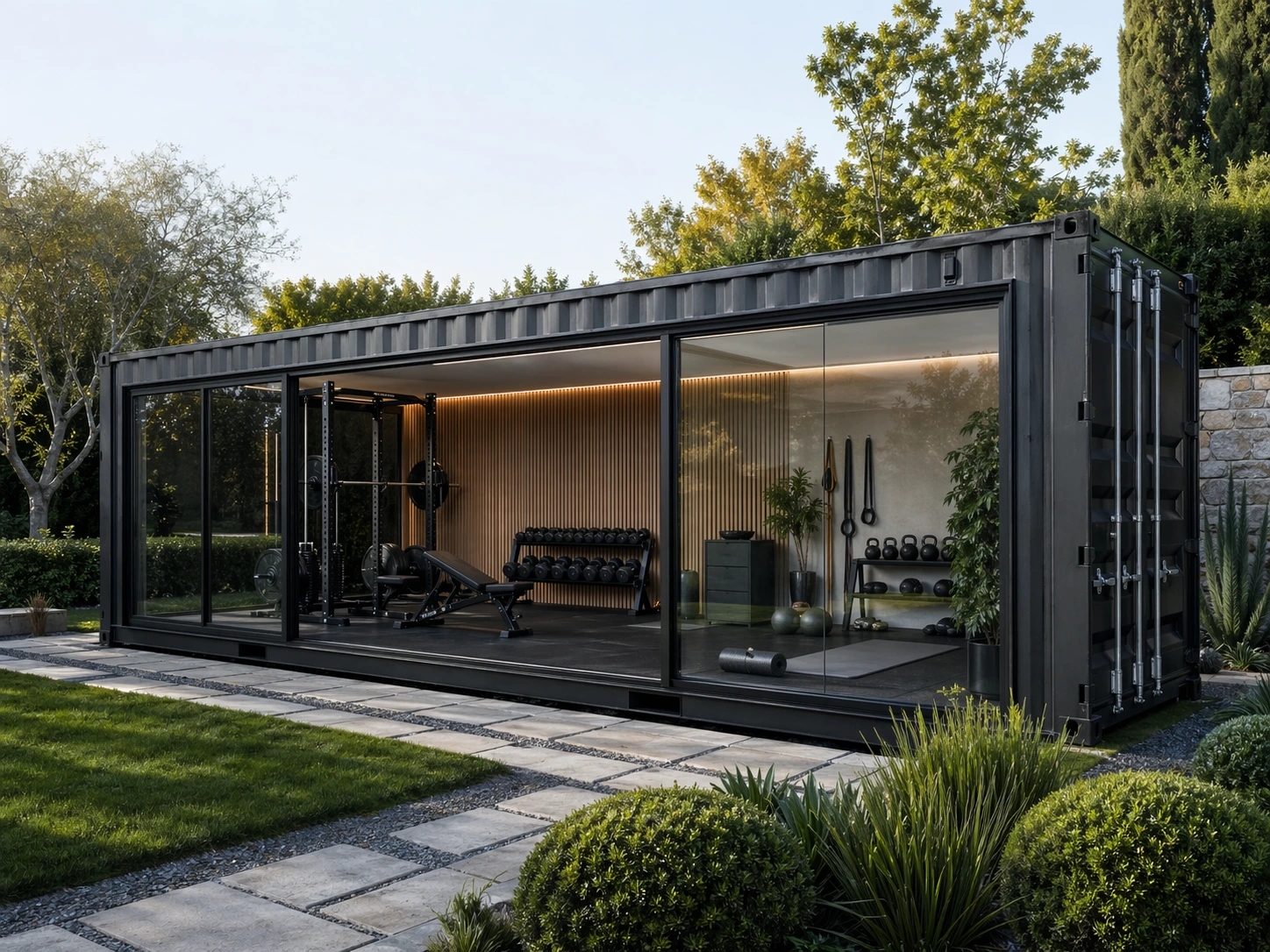 Hero view of a premium sports space created from a standard 40ft container with panoramic glazing.
From transport unit to luxury space
For decades, the container was simply a logistics tool. Today, it is the foundation of a new kind of architecture where mobility and design work together. This matters most in private gym spaces and boutique wellness environments, where delivery speed and clean installation are just as important as the final visual impact.
The difference between an industrial container and a specialized sports module lies in the engineering transformation. Ceiling height, daylight access, insulation, climate systems, and overall ergonomics are all redesigned. That is how a steel frame becomes a motivating environment instead of a limiting box.
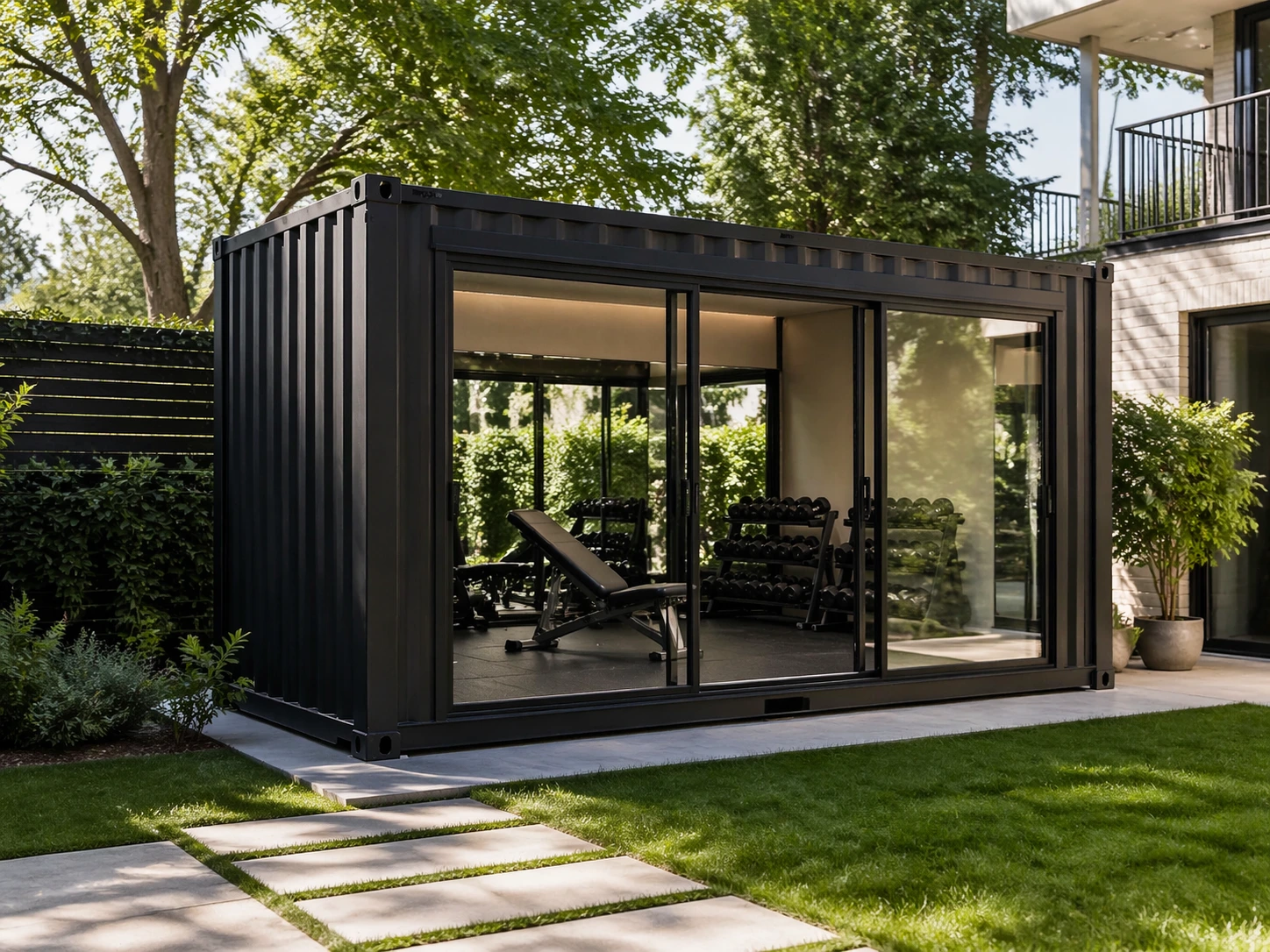 Compact 20ft modules are highly effective for private properties when light and flooring are engineered correctly.
 Wellness and pilates concepts depend on silence, material quality, and a calm spatial atmosphere.
The technical arsenal behind a professional module
The biggest difference between a mass-market unit and a true premium module lies in the hidden details. Insulation, glazing, vibration control, and air exchange determine whether the space will remain comfortable 365 days a year or simply look good in photos.
For sports use, the floor and acoustics are crucial. Under intense training loads, a metal structure can resonate if the flooring system is not engineered correctly. That is why professional projects rely on layered floor assemblies and anti-vibration surfaces that protect both user comfort and structural longevity.
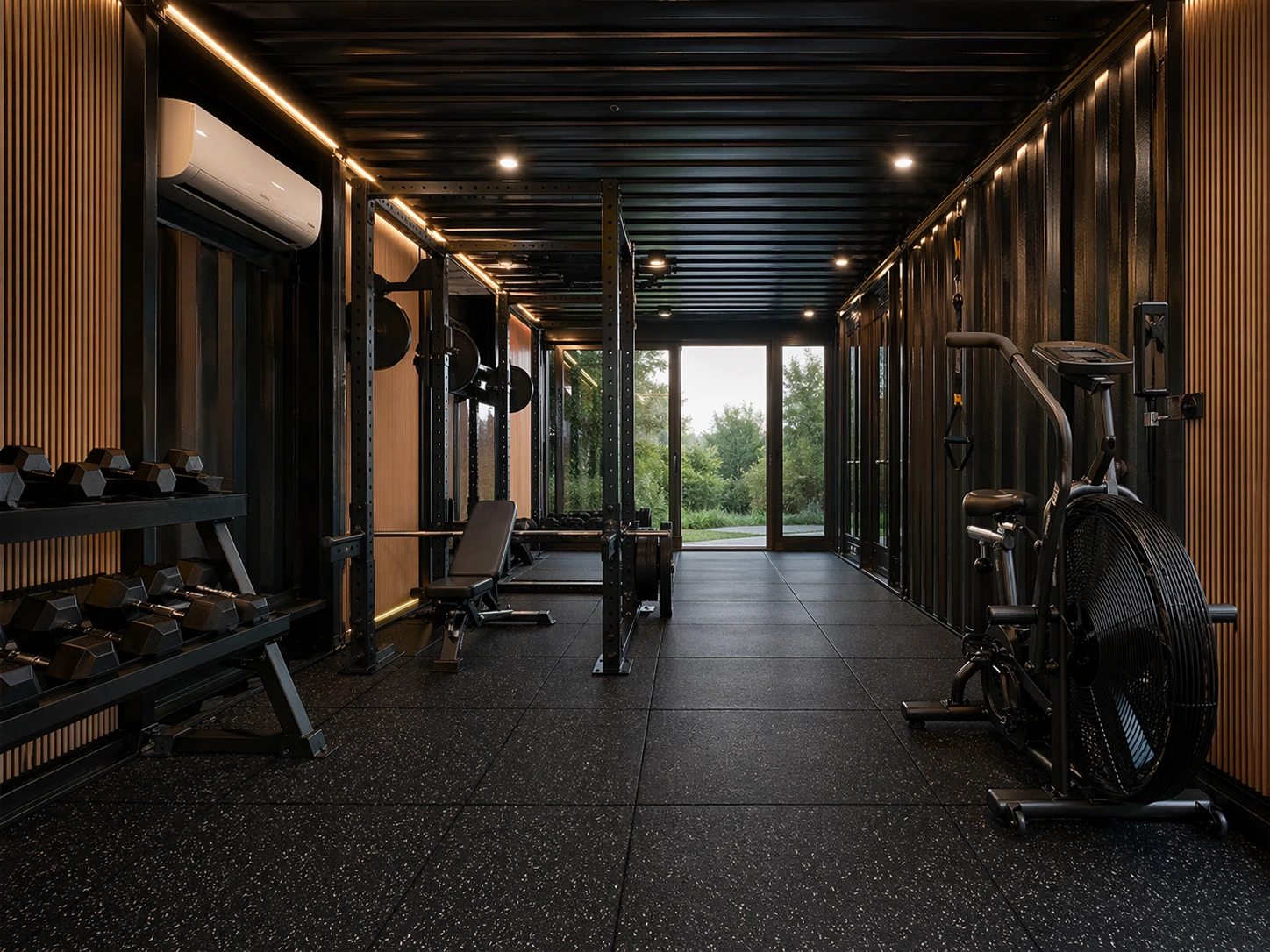 Flooring, insulation, and climate systems are the core of a professional sports module.
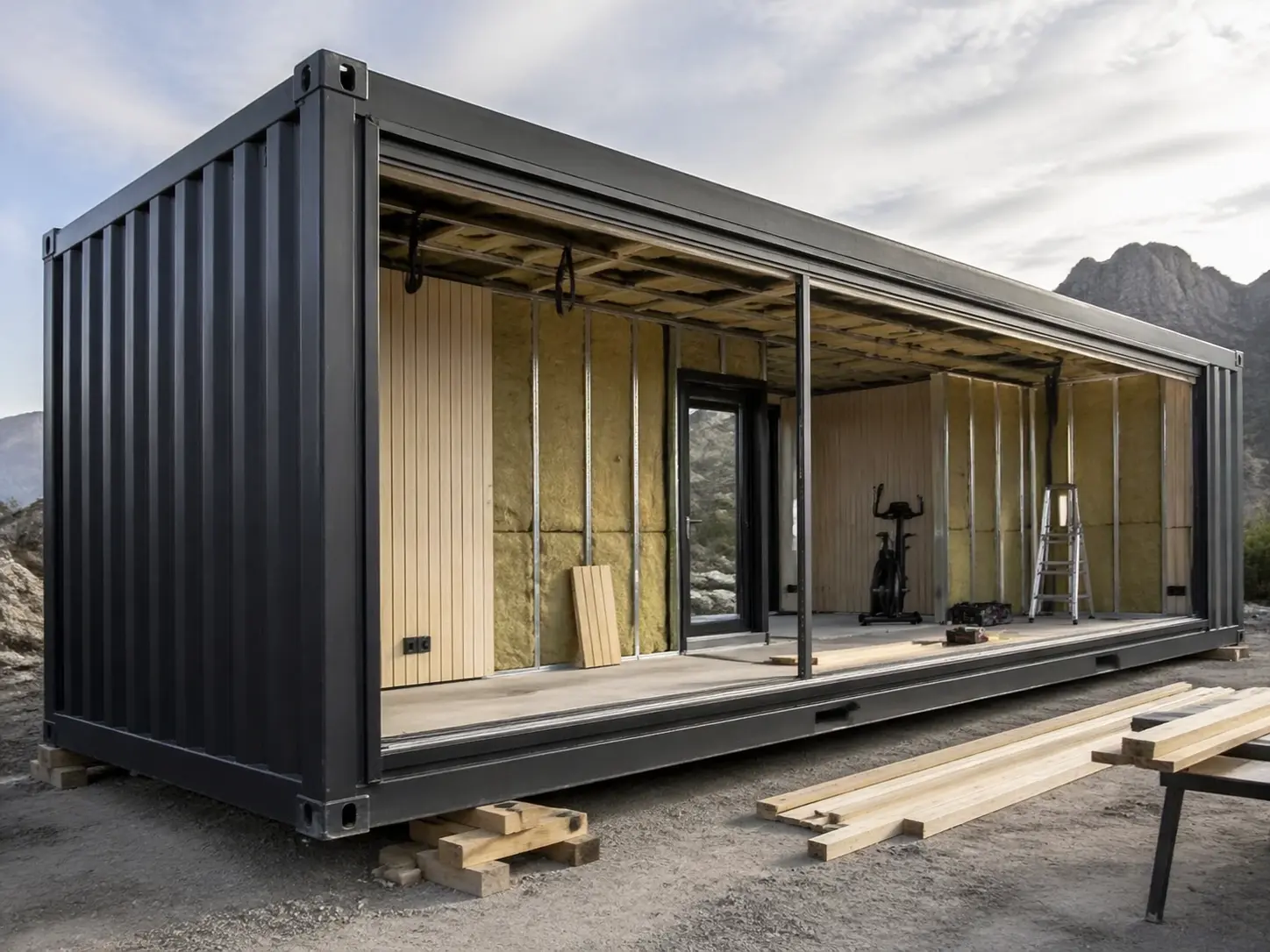 You can spot quality early by looking at insulation, steel framing, and glazing execution.
Climate control and fresh air all year round
Inverter systems alone are not enough. Real comfort comes when they are paired with strong air exchange, CO₂ monitoring, and energy-efficient glazing. This allows the interior to maintain a stable microclimate through both summer and winter without unnecessary operational costs.
In a premium environment, every element works together — silence, temperature, daylight, and fresh air. That is what turns a workout or pilates session into an experience rather than a visit to yet another room full of equipment.
Containers vs. traditional construction
With conventional construction, the biggest issue is rarely just price — it is unpredictability. Timelines, wet works, multiple contractors, and cost overruns often turn projects into a long and stressful process. In modular gym and wellness projects, most of the work is completed in a controlled production environment, which shortens delivery and makes budgeting clearer.
On-site installation is also much cleaner. There is no endless dust, no months of noise, and no aggressive disruption of the landscape. For hotels, villas, and private estates, that means preserving the visual quality of the property from day one.
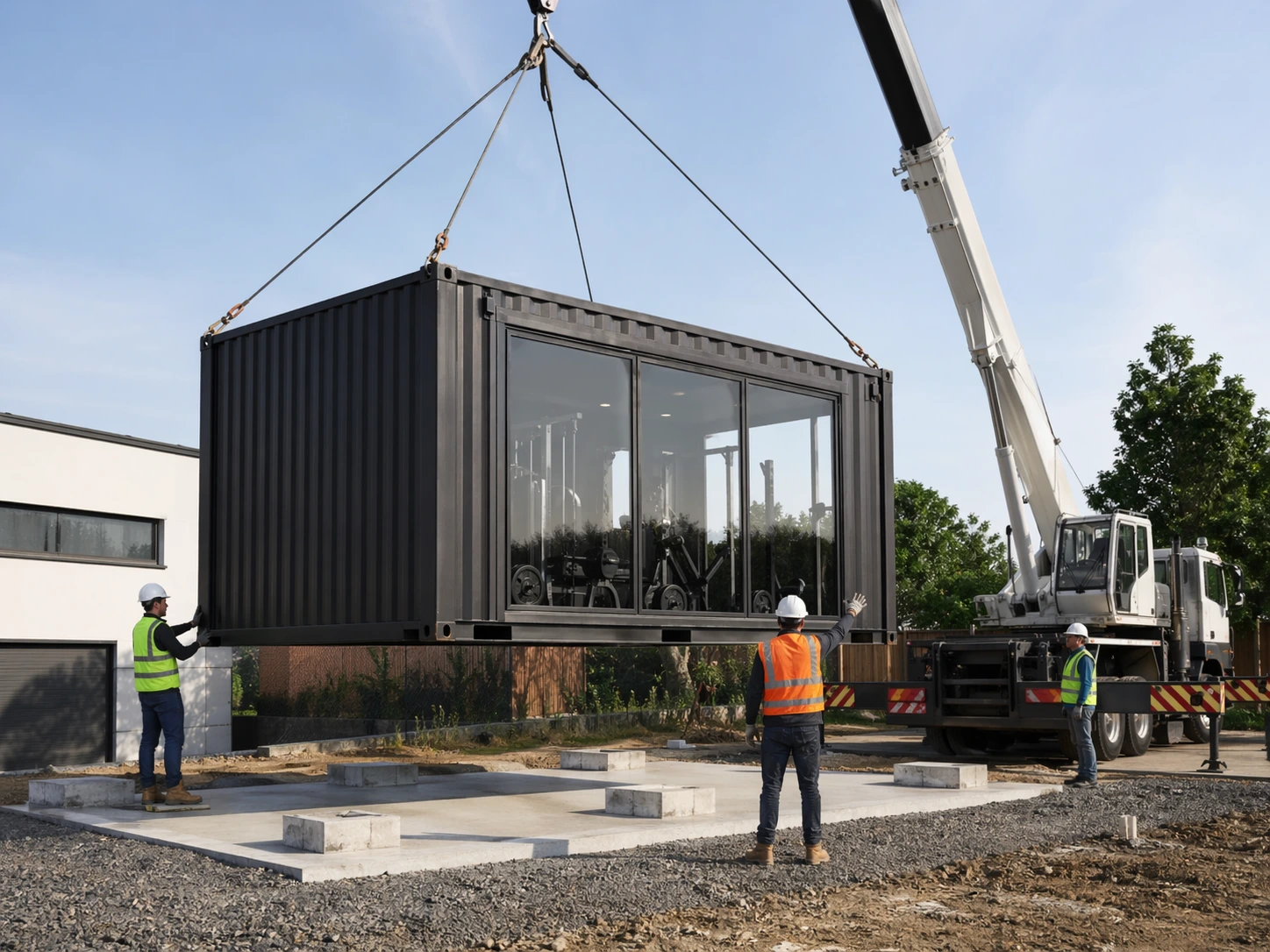 Controlled production and fast installation reduce both project timelines and execution complexity.
 Larger commercial concepts are created by combining standard 40ft modules rather than inventing unrealistic container sizes.
Administrative and financial advantages
Portable modular structures often benefit from lighter procedures than permanent buildings. Costs also remain easier to predict, while the module itself stays a movable asset that can be relocated, resold, or adapted to a different site. That changes the nature of the investment: it is no longer just construction, but a mobile lifestyle or business asset.
How to recognize a high-quality modular object
Quality becomes obvious long before you admire the façade. Look at the load-bearing structure, warranty, fire safety, energy class, and how the module behaves under real use. A premium product is not defined by looks alone, but by how stable, quiet, and comfortable it feels in practice.
Panoramic design also needs technical discipline. Large glazing only works when the glass specification, insulation package, and climate system are developed together. Otherwise, the visual effect quickly turns into an operational problem.
 The evening exterior shows how a module can also work as an architectural highlight on the property.
 Recovery pods are a natural extension of the sports function in premium wellness concepts.
KONTEYA as an engineering solution for Europe
KONTEYA positions the container not as a temporary object, but as a finished space with a clear purpose — training, pilates, recovery, or premium hospitality use. In gym modules, the focus is on structural loads, flooring, and acoustics. In wellness and pilates concepts, daylight, calmness, and carefully selected materials become equally important.
That is why modular solutions continue to gain traction: they combine speed, control, mobility, and a premium feel in one complete system. For the client, that means fewer compromises and a much shorter path to a finished space.
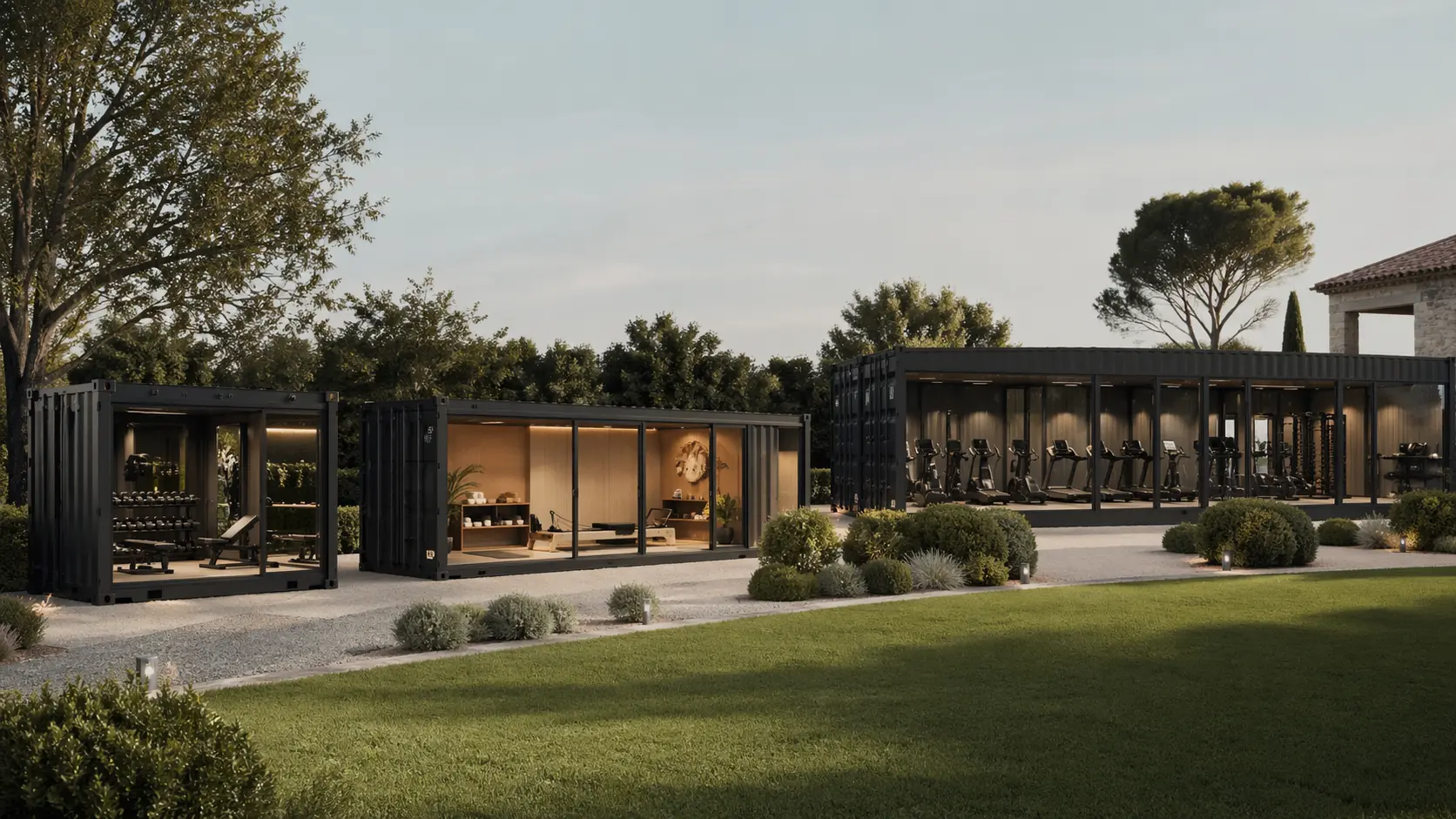 The range of 20ft, 40ft, and connected 40ft concepts shows how standard modules can cover very different use cases.
Frequently Asked Questions
Is a building permit required?
In many cases, these projects follow the regime for relocatable objects rather than a full traditional building permit. The exact procedure depends on the municipality and site conditions, but it is generally lighter than standard permanent construction.
How is the site prepared?
Most projects require level ground and a set of properly engineered support points or foundations according to the chosen model. This avoids the need for a full concrete slab and preserves more of the existing landscape.